Long arrival lines usually point to a check-in process problem, not simply a crowd problem. The fastest improvements come from reducing decision points, separating guest types, preparing staff scripts, and testing the arrival flow before doors open.
TL;DR: Fix check-in first when guests are frustrated at arrival. Better credentials, clearer queues, trained staff, working scanners, and exception handling can improve the first impression before larger technology or staffing changes are considered.
Why Arrival Sets the Mood
The check-in line is often the first operational moment guests judge. A slow line can make a polished agenda feel disorganized before the opening session begins. The issue is rarely one single flaw. It is usually a mix of unclear arrival instructions, too few staff, slow lookup rules, technology trouble, credential confusion, and late walk-ins.
Start by defining what the line must do. Some events only need to confirm names. Others must verify ticket tiers, IDs, age restrictions, waivers, accessibility requests, media credentials, VIP access, sponsor badges, or payment status. Each additional decision adds seconds. At scale, seconds become a visible line.
Diagnose the Actual Bottleneck
Stand where guests enter and watch the process. Are people stopping because they cannot find the correct line? Are staff searching manually? Are scanners failing? Are guests missing QR codes? Are badge printers slow? Are walk-up registrations mixed with prepaid attendees? Are VIPs and speakers using the same queue as general admission?
Record peak arrival patterns. If most guests arrive in a 20-minute window, the process must be built for that peak, not the average arrival rate. A system that works during staff rehearsal can still fail when rideshares, parking, weather, and session timing concentrate arrivals.
Fast Fixes Before Buying New Tools
Separate lines by task, not by wishful thinking. Pre-registered guests, onsite registration, speakers, VIPs, press, and problem resolution may need different paths. Put the fastest path in the most obvious position. Move exceptions away from the main flow so one missing email does not block twenty guests.
Send arrival instructions before the event with the correct entrance, required ID or ticket, bag policy, parking notes, accessibility entrance, and peak arrival warning. Keep the language direct. Guests should not need to search through a long confirmation email at the door.
Staff Scripts and Escalation Rules
Front-line staff need short scripts for common cases: no ticket, wrong name, transferred ticket, lost QR code, accessibility request, media credential, refund question, and late speaker arrival. Scripts reduce hesitation and prevent staff from inventing different answers.
Give each station a clear escalation path. One experienced lead should handle exceptions, while other staff keep the regular line moving. This is where guest logistics connect with broader planning. If arrival lines keep frustrating guests, review the check-in plan alongside catering, signage, and guest logistics practices rather than treating registration as a silo.
When Technology Helps
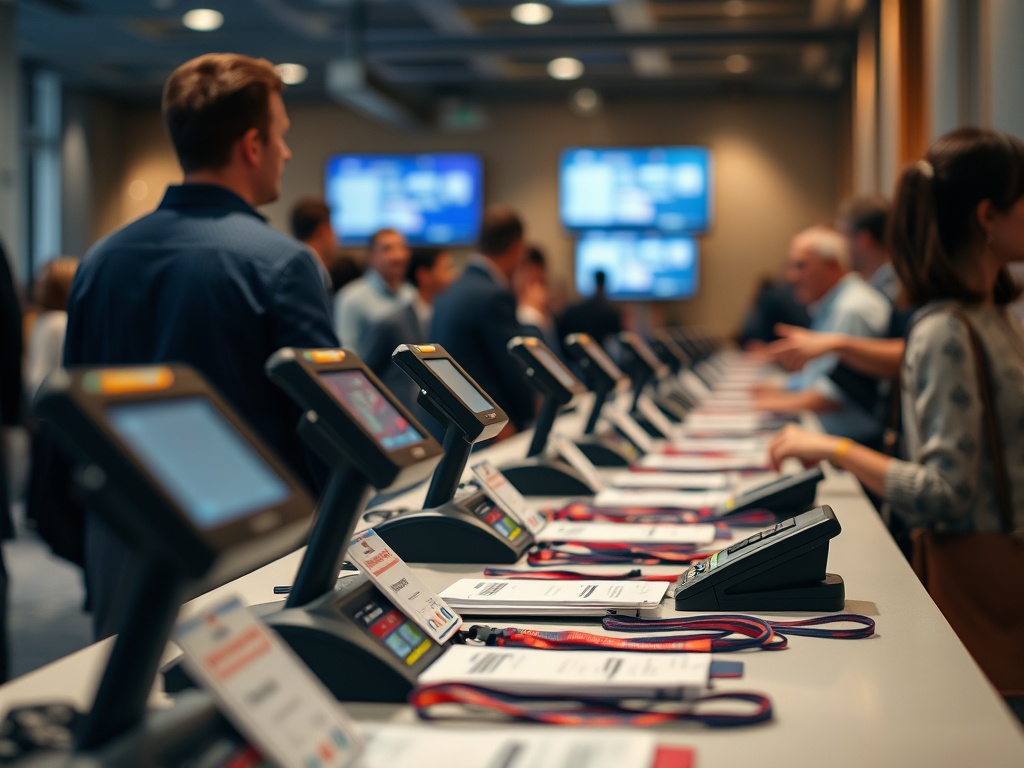
Technology helps when the process is already clear. Mobile check-in, QR scanning, self-service kiosks, badge printing, RFID, and app-based credentials can reduce friction, but they can also create new failures if data is dirty, Wi-Fi is weak, power is limited, or staff are undertrained.
Before adding a tool, ask what problem it solves. Does it reduce lookup time, split traffic, handle walk-ups, improve badge accuracy, update capacity, or sync with CRM data? If the answer is vague, fix process design first. For virtual or hybrid formats, the same principle applies to login flow and access links; the platform setup guidance in the virtual event platform beginner guide can help teams think through access before guests arrive online.
Measure What Guests Feel
Track peak wait time, average processing time per guest type, number of exceptions, scanner failure rate, badge reprints, no-show rate, and help-desk issues. Add a short post-event survey question about arrival clarity. The goal is not to blame the front desk. The goal is to find which design choices created the line.
For high-profile, crowded, or security-sensitive events, coordinate arrival with venue safety rules. CISA’s venue security guide emphasizes site-specific assessment and planning, which is especially relevant when arrival lines affect entrances, screening, exits, or public sidewalks.
Rehearsal Script for Peak Arrival
A useful arrival rehearsal takes less than an hour. Ask staff to act out the first 20 minutes of guest arrival. One person arrives with a valid ticket. One has the wrong email. One is a speaker. One needs accessibility support. One is a walk-up attendee. One is a sponsor with extra credentials. Run each case through the actual line design, technology, badge process, and escalation path.
During rehearsal, measure steps rather than relying on impressions. How many times does a staff member touch the device? How long does badge printing take? How often does a guest need to spell a name? Where does the line pause? Which questions require a supervisor? Small details matter because arrival lines are math. A ten-second delay multiplied by hundreds of guests becomes a visible operational problem.
After rehearsal, simplify. Remove unnecessary questions, pre-print what can be pre-printed, move exceptions away from the main line, and make the right queue obvious from the entrance. Then brief staff on tone. A calm, direct greeting can reduce anxiety even when a short wait is unavoidable.
Data Hygiene Before Doors Open
Many check-in delays begin in the registration data. Duplicate names, inconsistent company fields, missing ticket tiers, transferred registrations, unpaid orders, and late sponsor lists all slow the desk. Clean the list before the event and define how late changes will be handled. A tidy database is one of the cheapest line-reduction tools.
Prepare a printed or offline backup for essential information when appropriate. The backup should be controlled, current, and protected because attendee data may be sensitive. Do not leave guest lists exposed on an open table. Privacy and speed must both be considered.
Finally, align badges with the actual access plan. If a badge color, icon, or credential type affects room access, staff must understand it and guests must not be forced to interpret a hidden code. Clear credential logic prevents line disputes and awkward door conversations.
Queue Design for Different Event Types
Different events need different queue designs. A paid conference may need fast badge pickup and a separate problem-resolution desk. A public festival may need visible wayfinding and security coordination. A nonprofit gala may need donor, sponsor, volunteer, and table-host handling. A webinar may need a digital waiting room and support for missing access links.
The principle stays the same: group similar tasks together and remove slow exceptions from the main path. When the process respects the way guests actually arrive, lines shorten and staff sound more confident.
A Better First Ten Minutes
The best check-in process makes the guest feel expected. They know where to go, staff know what to do, and exceptions are handled without freezing the line. Start with the simplest fixes, test the arrival path, and only then decide whether outside tools or vendors are needed.
Educational note: This content is for informational event planning only. Confirm entry requirements, safety policies, accessibility procedures, privacy rules, and ticketing terms directly with official organizers, venues, and qualified advisors.