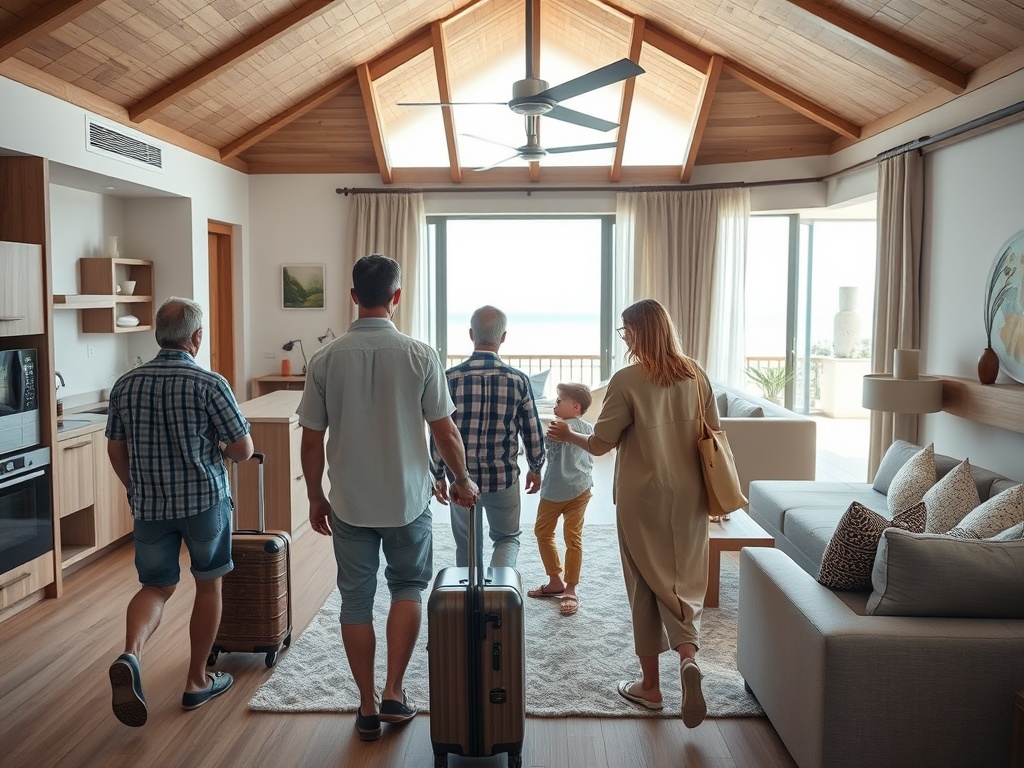
A villa or residence-style hotel room should be evaluated by its actual layout, occupancy, privacy, kitchen and laundry capability, service level, location, accessibility, and total stay cost rather than by the category name. Confirm the exact unit type and operating terms because properties use "villa," "residence," and similar labels in different ways.
TL;DR
- Verify bedroom and bathroom count, bed configuration, floor area, living space, kitchen equipment, laundry, outdoor areas, and whether facilities are private or shared.
- Check housekeeping frequency, transport around the property, occupancy rules, deposits, utilities or service charges, and cancellation terms.
- Use room-specific floor plans and written descriptions as stronger evidence than general property galleries.
Translate the category name into a floor plan
Start by ignoring the marketing label and listing the spaces you need. How many enclosed bedrooms are required? How many people need real beds rather than sofa beds or rollaways? Do you need more than one bathroom? Is a full kitchen necessary, or would a kitchenette be enough? Do you need laundry inside the unit?
Ask for a room-specific floor plan or detailed layout when the official page does not make these answers clear. A two-bedroom villa may include two fully enclosed bedrooms, or one bedroom plus a convertible living area depending on the property. A residence may have a full kitchen, while another property may use the term for a larger suite with limited cooking equipment.
The guide to hotel photos and descriptions before booking helps separate generic gallery imagery from proof tied to the exact unit category. For villas, that distinction is especially important because one resort can have several generations, locations, and configurations under similar names.
Verify occupancy and sleeping arrangements
Maximum occupancy is not the same as comfortable occupancy. Confirm the number and size of fixed beds, sofa beds, bunk beds, rollaways, cribs, and any extra-person charge. Ask where each temporary bed is placed and whether using it blocks living space or circulation.
For groups, privacy can matter more than raw capacity. A unit that technically sleeps six may be a poor fit for three couples if two guests sleep in the living room. Check bedroom doors, bathroom access, storage, and whether anyone must pass through another sleeping area at night.
If a hotel package is tied to the room type, use the hotel package evaluation framework to separate the value of the larger unit from dining, transfers, credits, or activities. This prevents the package from obscuring what you are paying for the accommodation itself.
Inspect kitchen, laundry, and household-style features
"Kitchen" can range from a microwave and mini-fridge to a full cooking setup with oven, cooktop, full-size refrigerator, dishwasher, cookware, dishes, and dining space. Ask for the actual equipment list if cooking is part of your budget or dietary plan. Also check whether basic supplies, coffee, dish detergent, and replacement consumables are included or charged separately.
Laundry can be in-unit, shared, or available only through hotel service. Confirm washer and dryer availability, detergent, operating hours for shared facilities, and any charge. Families and longer stays may assign significant practical value to these features because they reduce packing and service costs.
For budget comparisons, evaluating hotel packages on a budget can help quantify whether kitchen and laundry access replaces spending you would otherwise make or simply adds amenities you are unlikely to use.
Distinguish private features from shared resort amenities
A villa description may mention a pool, garden, terrace, beach access, or lounge area without making clear whether the feature is private, shared among a small cluster, or part of the main resort. Confirm this point when privacy is central to the purchase.

For private pools or hot tubs, ask about heating, seasonal availability, safety barriers, maintenance access, and whether there are additional energy or cleaning charges. For terraces and balconies, check whether they are furnished, exposed to neighboring units, or affected by weather. If the unit is detached or spread across multiple levels, confirm stairs and exterior paths.
Location within the resort can be another trade-off. A secluded villa may provide quiet and space but require golf-cart transport, shuttle service, or a longer walk to dining and pools. Ask for a property map and typical travel time to the facilities you expect to use most.
Review service frequency and hotel privileges
Residence-style accommodation sometimes operates with a different service model from standard guestrooms. Confirm housekeeping frequency, turndown if relevant, linen changes, trash collection, pool or garden servicing, room service, front-desk support, and maintenance response. If the unit is managed by a private owner inside a resort, verify which hotel services and facilities are included for that booking channel.
Also ask whether breakfast, lounge access, beach service, resort activities, kids' programs, and transport are included for every occupant or only for a base number of guests. A unit can have a high occupancy limit while bundled benefits apply to fewer people.
Confirm accessibility and safety for the exact unit
Multi-level villas, exterior paths, private pools, and remote locations can create accessibility or supervision considerations that differ from a standard hotel room. If step-free access, bathroom configuration, bed access, or communication features matter, request written details tied to the exact bookable category.
The U.S. Access Board's ADA standards address accessible transient lodging in covered U.S. facilities. Applicable requirements depend on the property and jurisdiction, and travelers should confirm the specific features they need rather than assuming all residence-style units have the same accessible configuration.
The U.S. Department of State's lodging safety guidance also recommends researching accommodations carefully and confirming needed facilities. For a villa, extend that check to exterior access, locks, pool barriers, emergency contact methods, and the route to staffed areas of the resort.
Audit fees, deposits, and stay rules
Large units can carry different deposits, damage authorizations, cleaning charges, minimum stays, utility policies, or cancellation schedules. Review the final price and the exact point at which money becomes nonrefundable. Ask whether housekeeping, pool heating, extra beds, additional guests, parking, and resort facilities create separate charges.
Red flags include a large unit with no floor plan or room-specific images, ambiguous bedroom definitions, private features shown only in general resort photography, inconsistent occupancy information, or hotel privileges that are not clearly attached to the booking channel. Clarify these items before paying a premium.
Use a residence-style room scorecard
| Dimension | What to verify | Strong evidence | Concern signal |
|---|---|---|---|
| Layout | Bedrooms, bathrooms, living areas | Floor plan matches written description | Capacity stated without layout detail |
| Sleeping fit | Fixed and temporary beds | Every guest has an acceptable arrangement | Sofa beds carry most capacity |
| Household features | Kitchen, laundry, storage | Equipment list is specific | "Kitchenette" or "laundry" is undefined |
| Privacy | Pool, terrace, entrance, shared areas | Private and shared features are clearly labeled | Gallery implies exclusivity without wording |
| Service | Housekeeping and resort privileges | Service schedule is documented | Different rules by booking channel are unclear |
| Access | Stairs, transport, accessible features | Route and unit details fit guest needs | Location or accessibility is uncertain |
| Total cost | Fees, deposits, extra guests | Final price and conditions are clear | Significant charges appear late |
Choose space that improves the stay
A villa or residence-style room is valuable when its extra space and household features solve real needs for the group. Confirm the layout, sleeping plan, kitchen and laundry, private versus shared areas, service model, access, and total cost before comparing the premium with multiple standard rooms. The strongest choice is the unit you can understand clearly before arrival, not simply the one with the most impressive category name.