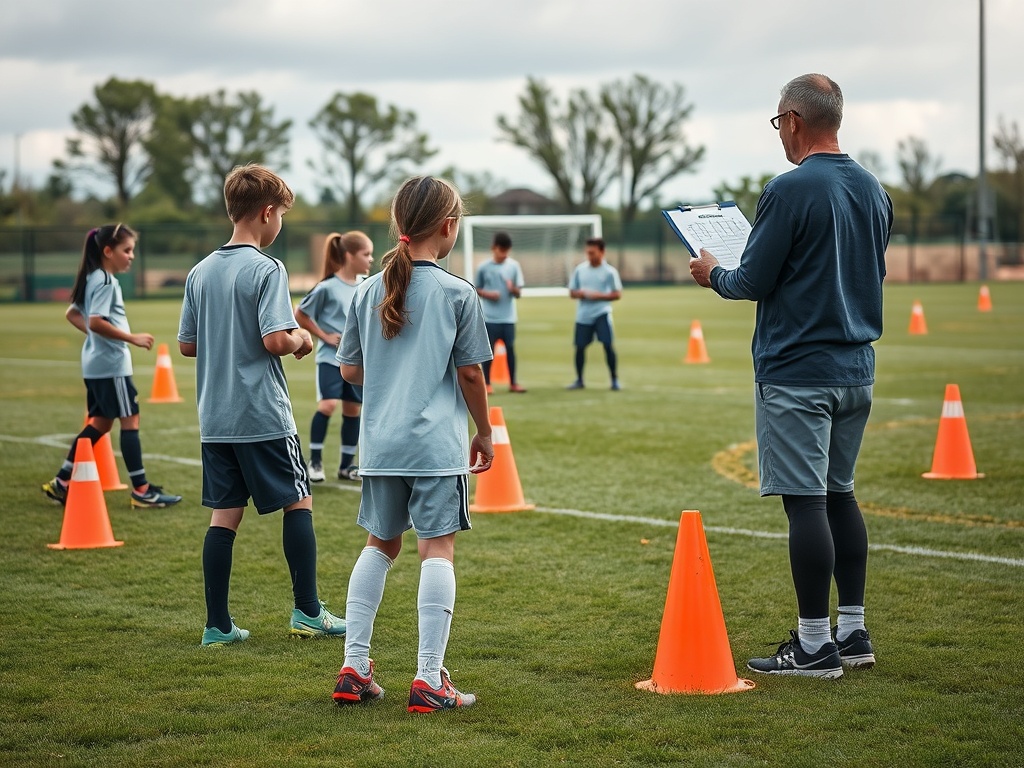
Practice stations keep athletes engaged when each station has a clear task, a short rotation time, enough repetitions, and a visible success cue. The coach’s job is to remove waiting time and make every group know what good execution looks like.
Key Takeaways
• Use three to five stations, not ten scattered activities.
• Give each station one skill goal, one constraint, and one measurable cue.
• Rotate before energy drops, then regroup briefly so athletes understand why the work matters.
The Engagement Problem Stations Solve
Long lines drain practice energy. Athletes wait, chat, and lose focus while one person performs the drill. Stations solve this by dividing the team into smaller groups with more touches, throws, shots, decisions, or movement reps. They are useful in youth sports, school teams, club sessions, and mixed-ability groups.
Good stations are not random activities. They are a practice design tool. A coach chooses the skill theme, breaks it into smaller tasks, and gives each group a job that connects to the larger goal. That aligns with the broad instructional idea behind quality physical education standards from SHAPE America national physical education standards, which emphasize purposeful movement, skill development, and responsible participation.
A Simple Four-Station Practice Template
Start with one theme, such as passing under pressure, finishing, defensive footwork, or serving accuracy. Then create four stations: technique, decision, pressure, and recovery. The technique station isolates form. The decision station adds a read. The pressure station adds a defender, clock, target, or score. The recovery station gives low-intensity mobility, ball handling, or reflection without turning practice into rest time.
For example, a basketball team working on passing might use chest-pass mechanics, passing out of a trap, a timed three-pass scoring drill, and a low-intensity catching station. A soccer team might use first-touch technique, 2v1 passing choices, a target-gate pressure drill, and mobility with light juggling. Coaches planning heavy sessions should also consider the recovery principles in Rest Days for Youth Athletes: Why Doing Less Sometimes Helps More so station volume supports development instead of piling on fatigue.
Station Design Checklist
| Design Element | Good Station Choice | Risk If Ignored |
|---|---|---|
| Task | One clear skill or decision. | Athletes ask what to do and lose reps. |
| Group size | Two to five athletes per station. | Lines become too long. |
| Success cue | A short phrase athletes can repeat. | Feedback becomes vague. |
| Rotation time | Short enough to keep quality high. | Energy drops and mistakes multiply. |
How to Explain Stations So Athletes Buy In
Athletes engage better when they know the why. Instead of saying, “Go to station two,” say, “This station trains the first look before you pass.” That one sentence turns movement into purpose. Each station should have a success cue athletes can repeat: “land balanced,” “scan before receiving,” “hit the back third,” or “recover to the cone.”
Demonstrate each station quickly, then let athletes start. Avoid a five-minute lecture before every rotation. Use one freeze moment halfway through the first round to correct the most common error. Coaches can use resources from NSCA tools and resources to support broader planning, supervision, and strength-and-conditioning thinking, especially when stations involve loaded movement or high-speed work.
Managing Mixed Skill Levels Without Losing the Group
Stations help when athletes vary widely in ability, but only if the coach builds progressions. Give every station a base version, a challenge version, and a support version. In a serving station, the base target may be a large zone. The challenge version may require a smaller area. The support version may move the athlete closer or reduce the speed requirement.
This approach keeps advanced athletes from coasting and beginners from feeling exposed. It also reduces behavior problems because everyone has a task that feels possible. When frustration still appears, the coach should use calm reminders, clear roles, and consistent boundaries. Those habits connect naturally with How to Handle Aggressive Parents, Players, or Fans as an Official, especially in environments where adults or spectators can raise the emotional temperature.
Timing, Space, and Equipment Choices
For most teams, six to eight minutes per station is enough. Shorter rotations work for younger athletes or high-intensity tasks. Longer rotations work when athletes need feedback and repetition. The key is to rotate before quality collapses. If the room or field is small, use lanes, cones, walls, partner tasks, or shadow reps to avoid collisions.
Equipment should be placed before practice begins. Each station needs the right balls, cones, bands, targets, or mats. A clipboard or laminated card can show the task, but avoid relying on long written instructions during a moving practice. Keep signs brief and text-free when possible so players are not standing around reading.
Reading the Room During Practice
Engagement is visible. Look for eyes on the task, quick rotations, steady communication, and athletes correcting themselves. Warning signs include long lines, repeated confusion, one dominant player taking every turn, or athletes drifting to water without instruction. When that happens, simplify the task, shrink the group, or add a scoring cue.
Teams and leagues that understand engagement often use the same principle beyond practice: give people a role, feedback, and a reason to return. That is one reason the fan-retention ideas in How Teams Use Loyalty Programs, Apps, and Data to Retain Fans are relevant to coaches too. People stay involved when the experience feels organized and meaningful.
End station practices with a two-minute transfer question: “Where will this show up in the next game?” Athletes should be able to answer. If they cannot, the station may have been busy but not clear.
Rotation Plans Coaches Can Reuse
A dependable station plan can be reused with different skills. Start with a warm-up station that raises temperature and rehearses the movement pattern. Follow it with a technique station that slows the skill down. Add a pressure station where athletes must make a choice. Finish with a transfer station that looks closest to game play. This sequence keeps practice from becoming a collection of unrelated drills.
Coaches should also assign station leaders. A leader can manage turns, reset equipment, or remind the group of the success cue. This does not replace coaching, but it gives athletes ownership and reduces dead time. Rotate leaders so the same confident players do not control every group. Quiet athletes often engage more when they have a specific job instead of a vague instruction to be louder.
At the end of practice, ask each group to name one skill they improved and one station that needs clearer rules next time. That feedback helps the coach refine spacing, timing, and challenge level without guessing.
Feedback Loops That Keep Stations Fresh
Stations improve when coaches adjust them weekly. If a station is too easy, reduce space, add a defender, shrink the target, or add a time limit. If it is too hard, widen the target, slow the feed, remove pressure, or shorten the distance. This flexible approach keeps the same structure useful across a full season.