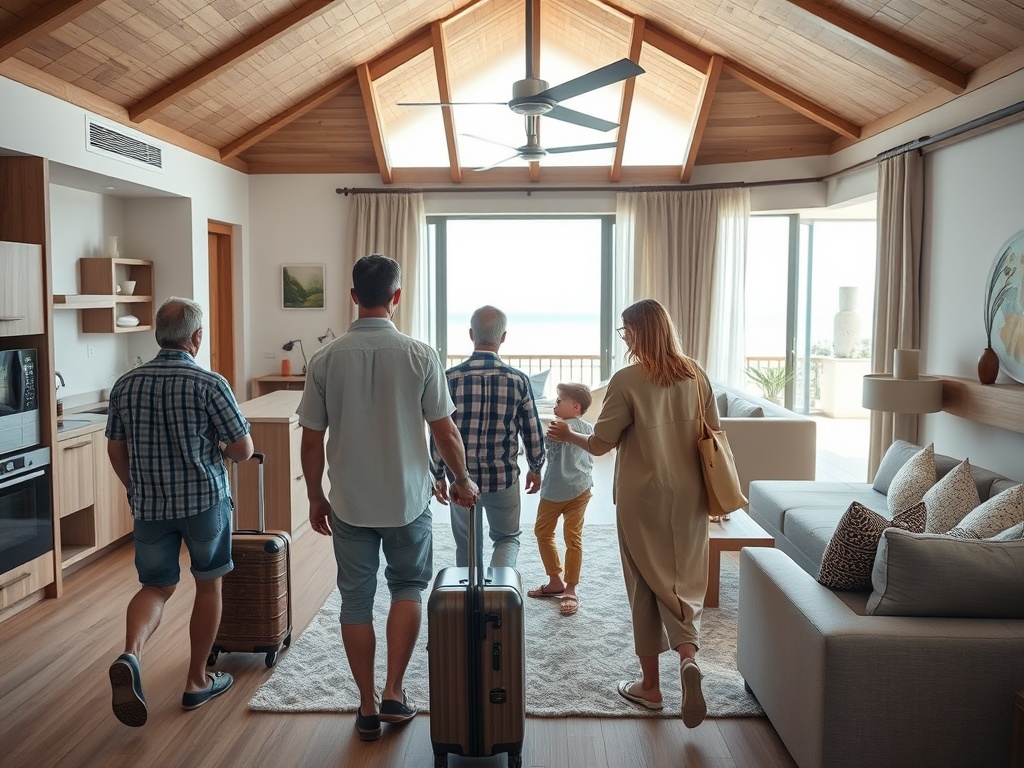
Hotel photos and descriptions are useful evidence only when you can connect them to the exact room category, facilities, and conditions you are booking. Evaluate them by checking source, date, room-specific details, floor-plan clues, amenity language, accessibility information, and consistency across the official site, booking page, and recent guest imagery.
TL;DR
- Separate property-level photos from room-category-specific photos and confirm which features are guaranteed.
- Look for dimensions, bed configuration, bathroom layout, view wording, and amenity details that support what the images imply.
- Treat wide-angle photography, staged spaces, generic gallery images, and vague terms such as "spacious" or "partial view" as prompts for verification rather than proof.
Work out what each photo actually represents
Hotel galleries often mix guestrooms, suites, restaurants, pools, event spaces, and destination imagery. Start by identifying whether a photo belongs to the exact room name on your rate. If the image appears only in a general property gallery, do not assume every room includes the same view, balcony, bathroom, furniture, or floor area.
Room names can also cover multiple layouts. A category described as a king room may include different orientations, floors, window placements, or bathroom configurations. Look for captions, floor plans, room-size information, bed details, and booking-page notes that narrow the interpretation. If an important feature appears in only one photograph and is not mentioned in the room description, confirm it before treating it as included.
The FTC's advertising and marketing guidance states that advertising claims must be truthful, non-deceptive, and supported by evidence. That principle is useful when reading hotel merchandising: rely more heavily on specific, verifiable statements than on the mood created by a gallery.
Read descriptive words as claims that need context
Words such as "ocean view," "garden view," "steps from the beach," "family-friendly," "accessible," "recently renovated," and "suite" can have different practical meanings. Ask what the words commit the property to provide. A view may be direct, angled, distant, or partially blocked. A suite may be a single large room or a multi-room layout. A renovation may apply to selected floors rather than the entire property.
Use measurable details where available. Floor area, number of beds, maximum occupancy, bathroom type, kitchen facilities, balcony status, elevator access, and distance to key amenities are more useful for comparison than adjectives alone. If a description uses a term that matters to your trip but gives no detail, place it on a verification list.
For larger units, the framework for villa and residence-style rooms helps test whether phrases such as "residence," "villa," and "apartment-style" translate into the sleeping, kitchen, laundry, and privacy features you expect.
Compare imagery across official and independent sources
The hotel's official gallery is the best place to confirm what the property intentionally represents, but it may emphasize the strongest angles and most recently refreshed spaces. Compare those images with recent traveler photos from reputable booking or review platforms to see how rooms look under ordinary lighting and use. Treat individual traveler images as observations, not universal proof, because room assignments and renovation status can differ.
Check whether independent images show the same furniture, bathroom fixtures, window shape, flooring, and major room features as the official category photos. Large differences can indicate multiple layouts, older inventory, or a renovation transition. Instead of assuming deception, ask the hotel which version applies to the room you are considering.
If you are comparing packages, use the same room-specific checks before assigning upgrade value. The broader guide to hotel packages before booking helps determine whether a pictured premium room is guaranteed by the rate or merely a possible upgrade.
Look for signs of photographic distortion
Wide-angle lenses can make rooms appear deeper and wider than they feel in person. Cropped images can hide adjacent buildings, roads, service areas, or the relationship between a room and public spaces. Twilight photography can make pool areas or views more dramatic than they appear during normal use. None of these techniques is automatically misleading, but they reduce the amount of spatial information you can infer from one image.

Use fixed objects to estimate scale: bed width, door height, standard luggage, dining chairs, or bathroom fixtures. Look at several angles rather than one hero shot. If a room seems unusually large in photos but the published floor area is modest, trust the dimension more than the visual impression.
For destination or property safety questions, the U.S. Department of State's lodging safety guidance recommends researching accommodation carefully and confirming needed facilities. Photos can support that research, but direct confirmation is stronger when you need a particular elevator, ramp, secure access point, or other facility.
Verify accessibility with written detail
Do not rely on a wheelchair symbol, one bathroom photograph, or a generic "accessible room" label to determine fit. In the United States, ADA Title III hotel reservation requirements require covered places of lodging to identify and describe accessible features in enough detail for travelers with disabilities to assess whether a room meets their needs.
If accessibility matters, ask for the exact features relevant to you, such as roll-in shower configuration, tub type, grab-bar placement, door clearance, bed access, visual alarms, route from the lobby, or proximity to elevators. Different accessible rooms can have different features, and a photo may show only one version.
Spot merchandising red flags
Red flags include galleries with no room labels, room descriptions that change between the hotel site and checkout, photos that show premium categories on lower-category booking pages without clarification, amenities mentioned in marketing but absent from the rate details, and renovation claims with no indication of which rooms have been updated.
Also be cautious when the only evidence for a key benefit is a stock-like destination image, a rendering, or an image so tightly cropped that the feature cannot be placed in context. Ask for clarification rather than assuming the most favorable interpretation.
The budget guide to evaluating hotel packages on a budget is particularly relevant when a low rate depends on accepting a less desirable room category. A cheaper room can still be good value, but the trade-off should be visible before you book.
Use a photo-and-description verification scorecard
| Criterion | What to check | Strong evidence | Weak evidence |
|---|---|---|---|
| Room identity | Exact category tied to images | Labeled category gallery and matching details | Generic property gallery only |
| Layout | Size, beds, bathroom, floor plan | Dimensions and multiple angles agree | Scale inferred from one wide-angle image |
| View | Written view category and orientation | View type is clearly defined | Scenic image with vague wording |
| Amenities | In-room and property features | Features appear in rate details | Amenities shown but not stated |
| Accessibility | Specific accessible features | Written description supports needs | Symbol or generic label only |
| Recency | Renovation and photo consistency | Current images align across sources | Major differences with no explanation |
Book the room you can describe clearly
Before paying, you should be able to describe the room in practical terms: category, bed setup, approximate size, bathroom type, major amenities, view wording, and any accessibility feature you require. Save the booking-page description and confirmation. If the room still depends on assumptions created by photography, ask the property to confirm the missing detail in writing. Clear evidence is a better basis for a reservation than an attractive gallery alone.