ADAS calibration after suspension work may be required when ride height, wheel alignment, thrust angle, sensor position, steering angle, camera aim, or radar orientation is affected. The requirement depends on the vehicle, the repair performed, and the manufacturer’s service information.
Advanced service takeaway: Suspension changes can alter how ADAS sensors “see” the road. Calibration is not only a collision-repair issue; it can also follow alignment, ride-height changes, steering repairs, sensor removal, windshield work, or structural repairs.
Why suspension work can affect ADAS
Advanced driver assistance systems use cameras, radar, ultrasonic sensors, steering angle data, wheel-speed inputs, yaw sensors, and other information to support features such as lane departure warning, lane keeping, adaptive cruise, forward collision warning, and automatic emergency braking. NHTSA describes these systems as assistive features that provide warnings or momentary assistance while the driver remains responsible for driving NHTSA driver assistance technologies.
ADAS depends on geometry. A forward camera aimed slightly wrong, a radar sensor mounted at a changed angle, or a vehicle sitting at the wrong ride height may affect how the system interprets objects and lane markings. Suspension work can change that geometry even if no sensor was directly touched.
Suspension jobs that may trigger calibration
Calibration may be required after wheel alignment, strut or shock replacement, control arm replacement, tie rod replacement, steering rack work, ride-height changes, lowering or lifting, collision-related suspension repair, subframe movement, wheel bearing work on some vehicles, or replacement of parts near radar mounting points. The list varies by make and model.
Some vehicles require calibration after alignment because the camera or steering-angle values must match the new geometry. Others require a steering angle sensor relearn. Some systems need static calibration using targets in a controlled bay, while others need dynamic calibration during a road drive under defined conditions.

Static vs dynamic calibration
Static calibration uses targets, measuring equipment, level floors, lighting requirements, and precise vehicle positioning. Dynamic calibration requires driving the vehicle under specified conditions so the system can learn from lane markings, speed, and sensor data. Some vehicles require both.
This is not a place for guessing. The manufacturer’s repair information should define when calibration is required, what equipment is needed, and how the result should be verified. IIHS has noted that crash-avoidance features can improve safety but complicate repairs, especially after crash damage or windshield replacement IIHS repair complexity. Suspension work belongs in that same careful mindset when geometry changes.
How shops evaluate the need
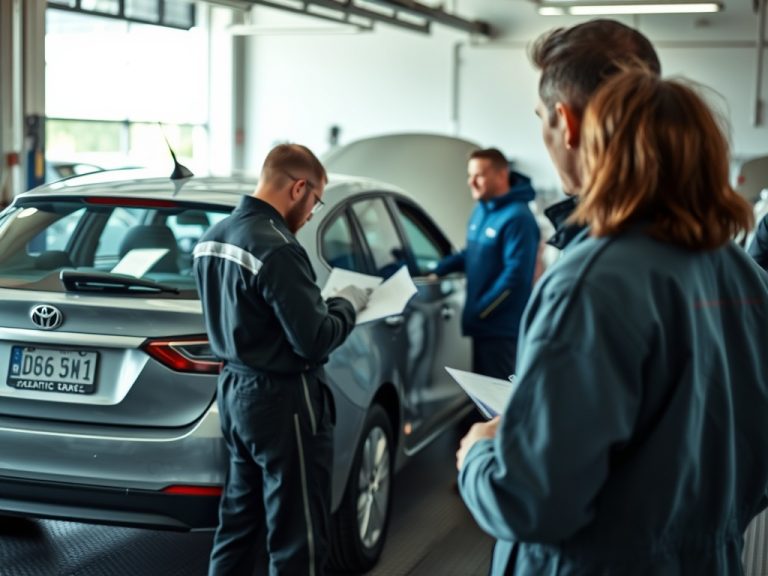
A careful shop identifies the ADAS features on the vehicle, checks repair procedures, performs a pre-scan, documents alignment and ride height, completes mechanical repairs, performs required alignment, then runs calibration or relearn procedures as specified. A post-scan and road test may be needed to confirm system status.
The shop should also inspect tires, suspension height, steering wheel centering, damage history, and any modifications. A lifted truck, lowered sedan, aftermarket bumper, mismatched tires, or previous collision repair can complicate calibration. Those issues should be discussed before the bill surprises anyone.
Signs the job moved beyond routine service
Warning messages, disabled driver assistance features, steering wheel off-center, abnormal lane-keeping behavior, adaptive cruise concerns, sensor blocked messages, poor alignment readings, or post-repair fault codes all suggest the job needs more than basic suspension work. So does any repair that changes ride height or sensor mounting.
If the vehicle is being inspected before purchase, ADAS status should be part of the review. A used car can look clean but have unresolved calibration, alignment, or sensor issues. The pre-purchase car inspection checklist gives a broader framework for catching those problems before the sale.
Common mistakes with ADAS and suspension
The first mistake is assuming no calibration is needed because no warning light is on. Some systems may be out of specification without immediately setting a visible warning. The second mistake is performing alignment without checking ADAS procedures. The third is changing ride height and expecting factory ADAS performance to remain unchanged.
Another mistake is ignoring documentation. If calibration was required, the invoice should show what was performed. If calibration was not required, the shop should be able to explain the service information used to reach that conclusion.
DIY limits
DIY suspension work is possible for skilled owners with safe equipment, torque data, and alignment support, but ADAS calibration is usually not a DIY task. It requires service information, scan tools, targets, space, level floors, measuring procedures, and verification steps. Even experienced DIY owners should plan for professional alignment and calibration when the vehicle’s systems require it.
Sustainable repair still matters here, but only when paired with correct technical procedure. The article on sustainable repair practices explains why repairing responsibly never means skipping safety-critical steps.
Ask for proof, not promises
After suspension work on an ADAS-equipped vehicle, ask whether calibration, relearn, or steering-angle reset was required. Ask what procedure was used, whether scans were performed, and whether the alignment printout is available. Good documentation protects the shop, the owner, and the next buyer.