Heat stress prevention for outdoor crews depends on planning work intensity, rest, shade, hydration, acclimatization, supervision, and emergency response before conditions become dangerous. Crews need practical routines that fit the jobsite, not vague reminders to drink water.
Key Takeaways
- Heat risk rises when workers are not acclimatized, work is intense, shade is limited, or protective gear traps heat.
- Plan schedules, breaks, water, shade, buddy checks, and emergency steps before the hottest part of the day.
- Train supervisors to recognize symptoms and adjust work when conditions change.
Editorial focus: Safety, Codes & Risk Management. Search intent: Informational. Audience stage: Problem-Aware; funnel stage: Top of Funnel.
Heat stress is a planning issue, not only a weather issue
Outdoor construction, landscaping, roofing, paving, concrete, maintenance, and utility work can expose crews to heat from air temperature, sun, humidity, equipment, reflective surfaces, and physical exertion. OSHA states that heat illness is preventable and highlights acclimatization as a major factor, especially during the first days of warm or hot work. For additional context, see OSHA heat exposure guidance.
A responsible plan looks at the task, the worker, the environment, and the schedule. Carrying materials in full sun is not the same as light layout work in shade. New workers, returning workers, and crews coming off cooler weather need time to build tolerance.
Controls that work together
Basic controls include cool drinking water, shade, rest breaks, adjusted work pace, earlier start times, task rotation, and monitoring. Personal protective equipment may be necessary for the task but can increase heat burden. Supervisors should avoid treating any single control as enough.
The OSHA-NIOSH Heat Safety Tool provides location-based heat index and recommendations, and it can support planning discussions. It does not replace site-specific judgment, but it gives crews a shared reference point for changing conditions. For additional context, see OSHA-NIOSH Heat Safety Tool.
That same planning discipline is useful when comparing this topic with Pressure washers for facility upkeep: what spec matters most, where access, sequencing, and coordination affect the final result.
Training should be specific and repeated
Workers should know symptoms such as dizziness, headache, heavy sweating, weakness, confusion, cramps, nausea, hot dry skin, or fainting. They should also know that waiting to report symptoms can make the situation worse. Buddy systems help because a worker may not recognize their own confusion or declining coordination.
Supervisors need a response plan that includes who calls emergency services, where responders enter, how the worker is cooled, and who guides help to the exact location. On large sites, remote work areas, rooftops, or transit corridors, emergency access must be planned with the same seriousness as material delivery.
Common mistakes in summer field work
One mistake is relying on toughness or experience. Experienced workers can still develop heat illness, especially after illness, travel, medication changes, poor sleep, or time away from heat. Another mistake is putting water on site but not making breaks realistic. A third is ignoring radiant heat from roofs, pavement, equipment, and enclosed areas.
Contractors should also review local rules because heat requirements vary by jurisdiction. This article is educational and does not replace legal, safety, medical, or compliance advice. Employers and site leaders should follow applicable regulations and qualified safety guidance for their location.
For teams thinking about adjacent building risks, Whole-home renovation sequencing for occupied houses adds a practical maintenance perspective without pulling the article away from its main scope.

Crew-level habits that make the plan real
A heat plan works only when crews use it without feeling punished for slowing down. Supervisors set the tone by taking breaks seriously, reminding workers to drink water before symptoms start, and adjusting tasks when conditions worsen. Crew leaders should treat heat checks as normal field management, not special treatment.
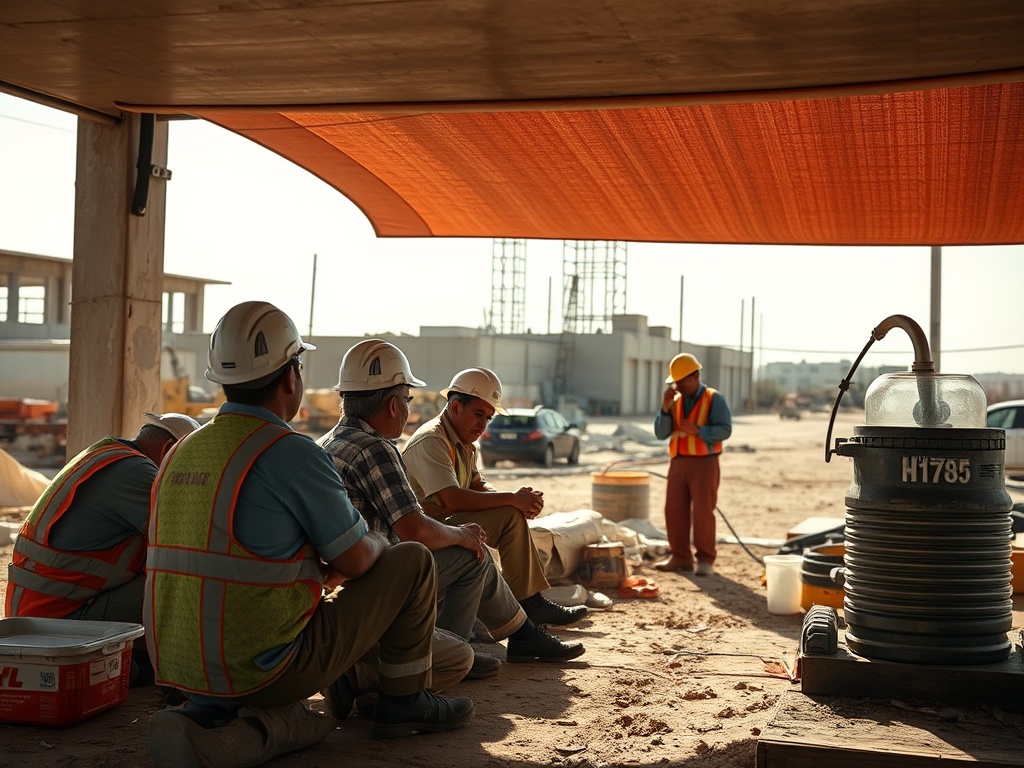
Jobsite layout can make safe behavior easier. Shade, water, cooling supplies, and communication tools should be near the work area. If workers must walk far for water or feel they are holding up the crew by taking a break, the written plan will not match the real site.
After a hot-weather incident or near miss, teams should review what happened without blame. Was the worker new to the heat? Was the task heavier than expected? Was shade too far away? Did the crew recognize symptoms late? Those answers can improve the next shift.
Planning for subcontractors and visitors
Heat planning should cover subcontractors, delivery drivers, inspectors, and visitors as well as the main crew. People who are onsite for a short task may not know where water, shade, or emergency help is located. A quick orientation can prevent confusion during high-risk conditions.
A broader construction or facilities review may also include Airport, rail, and transit projects: why logistics drive everything, especially when documentation and timing influence future work.
Multi-employer sites should clarify who monitors shared areas, who communicates changes in work-rest expectations, and how heat concerns are escalated. A strong plan can fail if each company assumes someone else is watching the same risk.
Additional project note for Article 9
Heat plans should be reviewed when the work changes. A crew that starts the morning with light layout may face a different risk when unloading materials, climbing ladders, cutting roof materials, or working near hot equipment later in the day. Supervisors should reassess conditions as tasks shift. They should also document major adjustments so future crews understand why certain work windows, crew rotations, or break patterns were chosen for the site and season.
Comparison table for practical decisions
| Risk factor | Why it matters | Planning response |
|---|---|---|
| New or returning worker | Lower heat tolerance during early exposure | Use gradual acclimatization and closer checks. |
| High humidity | Sweat evaporation becomes less effective | Increase rest and monitor symptoms closely. |
| Heavy PPE | Heat escapes more slowly | Rotate tasks and schedule cooler work periods. |
| Remote work area | Emergency response may be slower | Plan access, communication, and cooling supplies. |
Summer heat prevention field checklist
- Review forecast and heat index before the shift.
- Place water and shade close to the work, not far across the site.
- Set rest breaks based on conditions and workload.
- Pair workers for buddy checks during high-risk periods.
- Train crews to report symptoms early.
- Create an emergency cooling and access plan for each jobsite.
Cooler planning keeps crews safer and projects steadier
Heat stress prevention is a daily management practice. Crews need water, shade, breaks, training, and authority to slow down when conditions demand it. A site that plans for heat before the first symptom appears is better positioned to protect people and keep work moving responsibly.
This content is for informational and educational purposes only. It does not constitute professional engineering, legal, code-compliance, safety, or project management advice. Requirements vary by jurisdiction and project condition; consult qualified professionals for project-specific decisions.