Hospitality FF&E choices should be evaluated as operating assets, not as isolated design objects. The strongest selections support the intended guest experience while meeting durability, maintenance, accessibility, safety, replacement, procurement, and lifecycle-cost requirements that fit how the hotel will actually operate.
TL;DR
- Judge furniture, fixtures, and equipment against use intensity, cleanability, repairability, lead time, and total ownership cost.
- Validate dimensions, finishes, accessibility clearances, safety requirements, and maintenance needs before approving a full rollout.
- Use mock-ups and operational testing to expose problems that renderings and finish samples cannot show.
Start with the operating brief, not the mood board
A useful FF&E review begins with how a space is expected to function. A lobby lounge, pool deck, all-day restaurant, guestroom, meeting room, and extended-stay kitchen create different loads, cleaning cycles, moisture exposure, storage needs, and replacement risks. Define the operating conditions before comparing aesthetics.
For each item, identify who uses it, how often it moves, what can spill on it, who cleans it, and what happens when it fails. A beautiful chair that is difficult to move, repair, or clean can create recurring labor and replacement costs. A bedside table that blocks a path of travel or conflicts with power access can weaken room usability even if its finish matches the concept perfectly.
Design should still support the property's positioning. The point is to connect design intent to measurable operating requirements rather than treating appearance and performance as separate decisions.
Test durability and maintainability as a pair
Durability is more than whether a product survives a specification test. Ask how the material ages in the real environment and whether visible wear can be repaired without replacing the entire item. Evaluate stain resistance, abrasion, moisture exposure, sunlight, hardware quality, joint construction, edge protection, and the availability of replacement parts or touch-up materials.
Maintenance teams can identify hidden problems early. Ask how upholstery is removed, how a fixture is accessed, whether replacement lamps or drivers are standard, whether furniture can be lifted safely for cleaning, and whether finishes tolerate the property's approved cleaning chemicals. These details often determine actual service life.
For equipment that uses energy or water, operating performance belongs in the evaluation. ENERGY STAR Portfolio Manager is designed to help commercial-building owners benchmark resource performance over time. FF&E decisions do not determine a hotel's whole-building performance by themselves, but equipment efficiency and operating patterns can contribute to lifecycle cost and resource use.
Verify accessibility and spatial fit before procurement
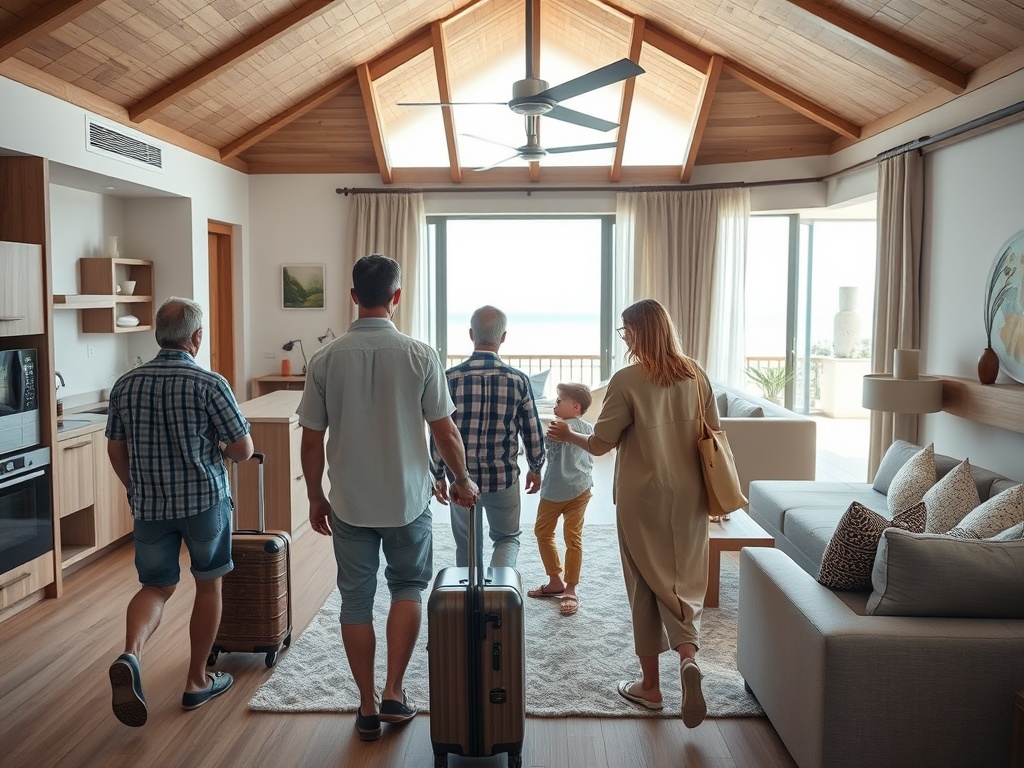
Dimensions that look acceptable on a plan can fail when door swings, luggage, housekeeping carts, pull-out beds, furniture movement, and guest circulation are considered together. Review full-scale clearances where possible and coordinate FF&E with architecture, electrical, lighting, and accessible routes.
The U.S. Access Board's ADA standards include requirements for transient lodging and accessible guest rooms. Project teams should confirm which requirements apply to the property and jurisdiction, and should not assume that a vendor's "accessible" label resolves layout compliance.
In guestrooms, test reach, transfer space, controls, lighting, power access, desk ergonomics, luggage placement, and bathroom interfaces. In public areas, assess seating choice, table access, circulation pinch points, and whether decorative objects narrow routes when the space is busy.
Use mock-ups to challenge the specification
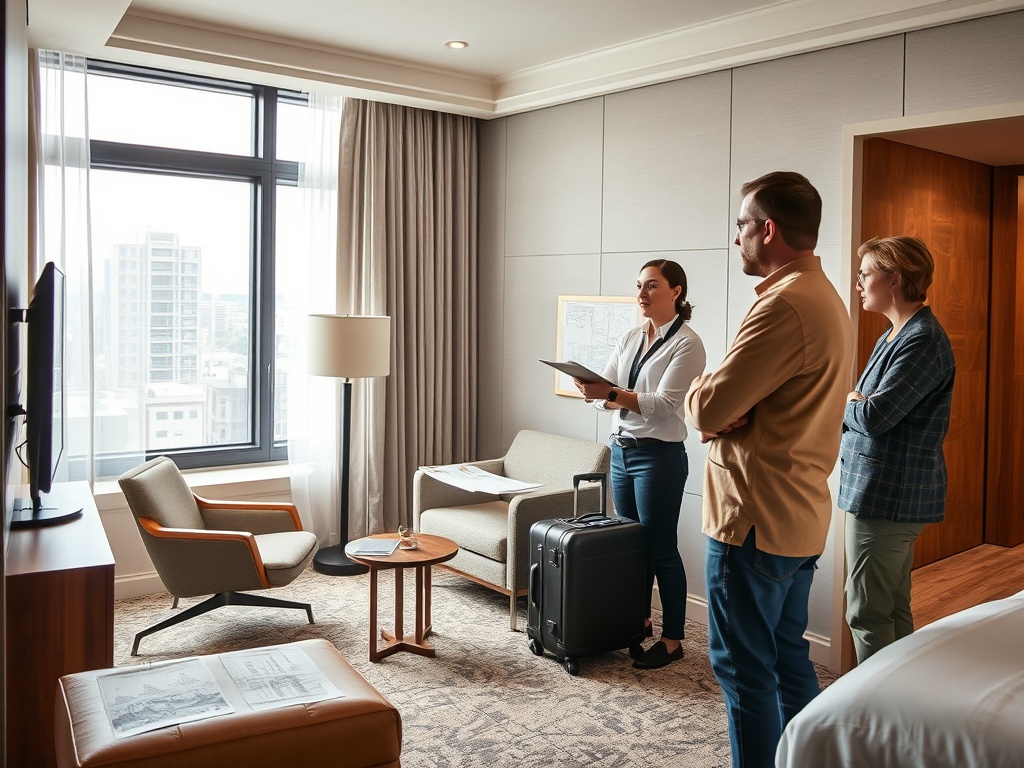
A mock-up is most valuable when operations staff are allowed to use it as they would use the finished space. Sit in the chair for an extended period. Open every drawer and cabinet. Roll luggage through the room. Make the sofa bed. Clean the table. Move a housekeeping cart around furniture. Plug devices into the available power points. Test curtains, switches, task lights, and door hardware.

For guestrooms, photograph the mock-up from the angles future guests are likely to see. This creates a useful bridge between design review and the later merchandising challenge discussed in evaluating hotel photos and descriptions. If the room is difficult to explain accurately in photography, the problem may be the layout or product selection rather than the marketing.
Mock-ups also reveal conflicts between trades. A decorative pendant can interfere with head clearance; a desk can cover an outlet; a nightstand can force a lamp to sit awkwardly; a banquette dimension can reduce comfortable dining space. Finding those issues before a full order is materially less disruptive than discovering them after installation.
Separate capital price from lifecycle cost
The lowest purchase price can be expensive over a full operating cycle if items require frequent replacement, specialist maintenance, or long downtime. Compare acquisition cost with expected service demands, spare-part strategy, warranty conditions, freight, storage, installation, and replacement lead time.
Procurement risk also matters. Confirm manufacturing location, production capacity, approved alternates, minimum order quantities, sample sign-off, quality-control process, packaging, delivery sequencing, and responsibility for damage. Long-lead custom items can be appropriate, but they should have a contingency plan when they sit on a critical opening path.
Premium packages and guest-facing upgrades create another test: does the FF&E visibly support the price positioning? The article on luxury hotel package inclusions can help frame how guests evaluate what they actually receive, while the guide to resort restaurants before booking shows why operational details such as seating, comfort, hours, and reservations shape perceived value beyond decoration.
Flag choices that need deeper validation
Red flags include products selected from a residential catalog without hospitality-use review, finishes that cannot be repaired locally, proprietary components with uncertain supply, dimensions that have not been tested in a mock-up, maintenance requirements that conflict with staffing, and custom items with no acceptable substitute.
Also be cautious when an item solves only a visual brief while creating recurring operational friction. A dramatic communal table may be poor for the intended guest mix. Open storage may photograph well but expose clutter. Highly reflective finishes may show fingerprints immediately. These are not universal failures; they are prompts to verify fit with the hotel's concept and operating model.
Apply an FF&E approval scorecard
| Criterion | Evidence to request | Strong signal | Concern signal |
|---|---|---|---|
| Guest fit | Full-scale test, ergonomic review, room mock-up | Comfortable and intuitive in real use | Looks good only in renderings |
| Durability | Material data, samples, prior-use evidence | Wear and cleaning needs are understood | Performance is mostly assumed |
| Maintenance | Cleaning method, parts, repair process | Housekeeping and engineering can service it | Specialist repair or difficult access |
| Accessibility | Coordinated dimensions and applicable standards review | Clearances work in the complete layout | Vendor label used as sole proof |
| Lifecycle cost | Purchase, freight, install, upkeep, replacement | Costs are visible across ownership | Decision based mainly on unit price |
| Supply risk | Lead time, alternates, QA and spare strategy | Contingencies are documented | Single fragile source on critical path |
A project does not need the highest score in every category. It needs an explicit reason for accepting trade-offs and a plan for managing the risk.
Approve what operations can sustain
A strong hospitality FF&E package looks coherent on opening day and remains practical after repeated guest use, cleaning, maintenance, and replacement. Use the operating brief, mock-ups, lifecycle cost, accessibility review, and supply evidence to make the decision. When the design choice can be explained in both guest-experience and operating terms, it is far more likely to remain successful beyond the installation photographs.