Compost and soil amendments last longer and stay easier to use when they are protected from contamination, excessive rain, extreme drying, pests, and label loss. Keep finished compost covered but not sealed into anaerobic conditions, store bagged products off wet ground, and follow each product label for moisture, temperature, and safety requirements.
TL;DR: Keep finished compost protected from heavy rain and windblown weeds, keep dry bagged amendments dry, close containers after use, separate incompatible products, retain labels, and rotate older material first. Do not assume every amendment can be stored the same way.
First, separate finished compost from active compost
An active compost pile is still decomposing and needs a balance of moisture and oxygen. Finished compost has already decomposed into a stable, earthy material and is being held for later use. Storage goals differ: an active pile must continue biological activity, while finished compost should be protected from contamination and severe weather without becoming waterlogged.
The U.S. EPA's home composting guidance explains that active composting depends on carbon-rich materials, nitrogen-rich materials, moisture, and air. If you are still adding food scraps or fresh yard material, you are managing a composting system, not simply storing a finished amendment.
How should finished compost be stored outdoors?
Choose a well-drained location and contain the compost so it does not wash into drains or neighboring areas. A breathable bin, covered bay, or pile protected by a tarp can work, depending on climate and volume. The cover should reduce saturation from heavy rain and reduce windblown weed seed while still allowing the material to remain in a stable, usable condition.
Oregon State University Extension recommends asking bulk suppliers whether finished compost is stored under tarps or otherwise protected from windblown weed seed. Its compost-use guidance also notes that very wet compost is clumpy while very dry compost can become dusty. For home storage, that is a useful practical target: protect compost from extremes rather than trying to keep it bone dry.
If the compost will be used for repotting or container gardening, review the root-bound houseplant guide before mixing amendments into indoor potting media, because garden compost and container mix serve different physical roles.
Can finished compost be stored in sealed plastic bags?
Short-term bag storage can be convenient, but avoid sealing wet, biologically active material in a way that creates foul anaerobic conditions. Commercial bagged compost should be stored according to the manufacturer's instructions. For homemade finished compost, make sure it is truly mature and not excessively wet before putting it into a closed container.
If you open stored compost and it has a strong rotten odor, unusual slime, or obvious contamination, do not assume it is ready to use around sensitive plants. Spread it in a safe area to aerate if appropriate, or seek local composting guidance if the material appears spoiled or contaminated.
Keep bagged dry amendments dry and identifiable
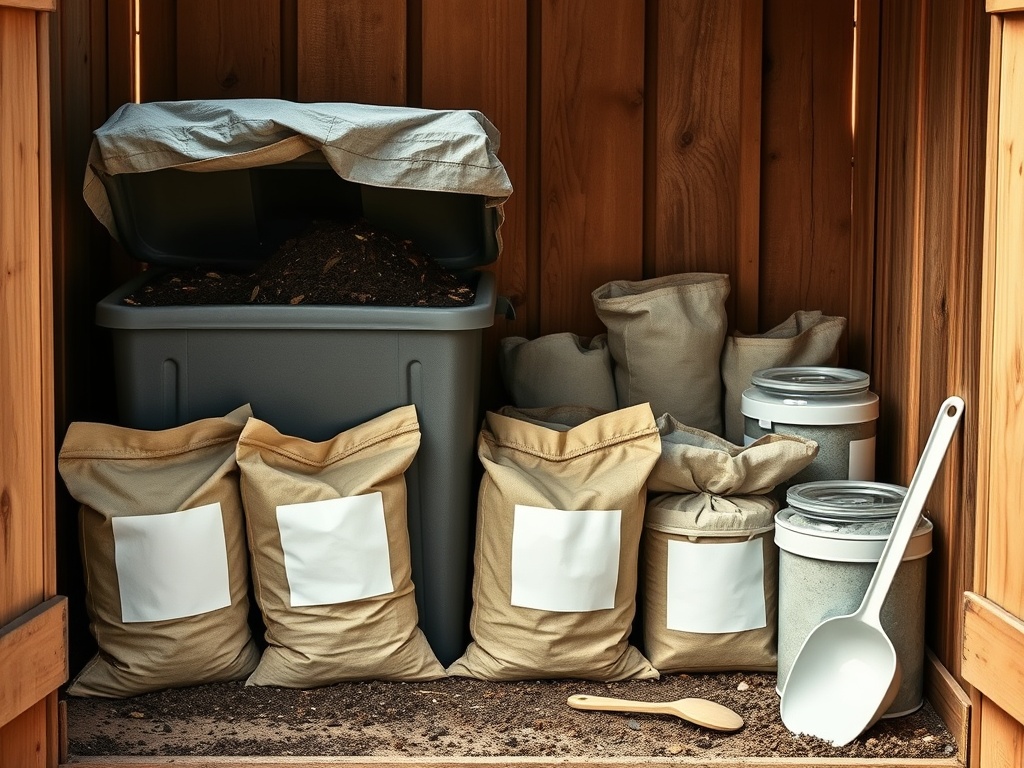
Products such as lime, gypsum, granular fertilizers, mineral amendments, and some soil conditioners can cake, dissolve, or become difficult to apply when exposed to humidity or water. Store them in their original bags when practical, inside a dry area and off damp concrete or soil. If the original package tears, transfer the product to a suitable container while keeping the original label or a complete copy with it.
The label matters because application rates, protective equipment, restrictions, first-aid information, and storage conditions can differ. A plain unmarked bucket of white granules is a future identification problem. Never rely on memory for products that may look alike.

Do fertilizers need special storage?
Yes. "Fertilizer" covers many chemistries, so there is no single storage rule beyond following the product label and keeping materials secure, dry where required, and protected from contamination. Some products have compatibility concerns with other fertilizers or chemicals. University of Minnesota Extension's urea guidance, for example, discusses moisture-related storage behavior and cautions against storing urea with ammonium nitrate.
For home gardeners, the practical lesson is simple: do not consolidate different fertilizers into one container, and do not store them next to fuels, pesticides, pool chemicals, or other reactive products unless the labels and local safety guidance permit it. Keep them out of reach of children and pets.
What about bone meal, blood meal, manure products, and organic fertilizers?
Organic amendments can attract animals or absorb moisture, and some have strong odors. Keep bags tightly closed and stored in a dry, secure location. Do not leave opened bags where rodents or pets can reach them. If a product has become wet, moldy, infested, or chemically altered, follow the manufacturer or local waste guidance rather than guessing that it is still safe to apply.
Composted manure products should be handled according to the package and food-garden safety guidance relevant to your region. "Organic" describes source or certification context; it does not mean a product is harmless if swallowed, inhaled, or misapplied.
How should potting mix and bagged soil be stored?
Keep bags closed and dry. Once opened, fold or clip the top or transfer the mix to a clean lidded container. The goal is to limit insects, weed seed, animal contamination, and excessive water while preserving the mix's physical structure.
Avoid storing potting mix in containers previously used for pesticides, fuels, cleaning chemicals, or other substances that could contaminate it. Label the container with the product name and, if useful, the date opened. For small quantities, a clean tote in a dry shed or garage can be more manageable than leaving half-open bags on the ground.
Can I store amendments through freezing weather?
Many dry mineral products tolerate cold storage if they remain dry, but liquids and biological products may have temperature limits. Some liquid fertilizers can separate or be damaged by freezing. Microbial inoculants and specialty products may have narrower storage ranges. Check the label rather than using a blanket rule.
Finished compost can remain outdoors through winter in many climates, but covering it may help prevent nutrient loss, waterlogging, or erosion depending on site conditions. A frozen pile is not necessarily ruined; biological activity simply slows in cold conditions.
How long can I keep compost and amendments?
Shelf life varies. Finished compost can remain useful when protected, while fertilizers, inoculants, and specialty amendments may have manufacturer shelf-life guidance. Use older material first when it remains in good condition and the label allows it.
Do not use age as the only test. Moisture damage, contamination, torn packaging, or lost labels can make a product unsuitable earlier. Conversely, a stable dry mineral amendment may remain physically usable long after purchase when correctly stored.
Organize storage around how you garden
Store heavy bags low, keep liquids upright with spill containment where appropriate, and dedicate measuring tools to garden products rather than returning them to kitchen use.
If you start vegetables from seed, the direct-sowing versus transplanting guide can help you decide which stored potting mixes and amendments you actually need for indoor seedlings. For irrigation-focused landscaping, water-efficient yard design explains why soil preparation should support water management instead of becoming a reason to add products without diagnosis.
Protect the Amendment Before It Reaches the Soil
Good storage keeps garden inputs predictable. Protect compost from saturation and contamination, keep dry products dry, retain original labels, separate incompatible materials, and use secure containers that match the product. The best amendment can become a problem if it is wet, mislabeled, infested, or stored where people and pets can reach it unintentionally.
Next step: Audit your storage area and discard or correctly identify any unlabeled material before the next planting or fertilizing job.
Informational note: This article is for general educational purposes. Follow product labels, local fertilizer and pesticide rules, manufacturer storage instructions, and local waste-disposal guidance for damaged or unwanted products.